Tourism (旅游业)is one of the world's largest industries. Many countries depend heavily on tourism as an important part of their economy(经济), while other countries﹣such as some of the smaller Caribbean island nations﹣are almost completely dependent on tourism.
Despite its economic advantages,tourism has disadvantages, too. While countries spend millions attracting tourists, they are also under the pressure that tourism brings.
One of the biggest problems is environmental. The building of roads and hotels can quickly destroy those very beautiful places. Development on wetlands,for example, influences wildlife; forests disappear as they are cleared to make way for buildings and to provide fuel (燃料). In addition, the tourist industry also puts a huge pressure on water people need. In dry Mediterranean areas, tourists use almost twice as much water as local people when swimming in the pool.
Tourism is also responsible for producing plenty of waste. Cruise ships in the Caribbean produce a lot of rubbish﹣more than 70,000 tons each year. It even has an influence on places far away like the Himalays,the word's highest mountain, which has more than 100 tons of rubbish sitting on it.
In spite of those problems, tourism can be good for communities and the environment. The park﹣entrance fees(费用)are paid for the protection of places of interest or the animals. What's more, tourism brings people closer to nature, and can give them a better understanding of the environment and the result of destroying it.This leads to pressure on local governments to protect these beautiful areas,and can result in the protection of endangered plants and animals. Also, it can provide people with more opportunities to find jobs in the tourist industry.
Although tourism has many advantages, it clearly has a bad influence as well. The challenge for local and national governments is to manage tourism so that communities can benefit economically, and yet at the same time, make sure that the tourist areas are kept for all to enjoy.
(1)Paragraph 3 and Paragraph 4 mainly talk about the of tourism.
A.disadvantages
B.development
C.importance
D.survey
(2)The writer shows the waste problem is serious by .
A.telling stories
B.listing facts
C.asking questions
D.making comparisons
(3)According to Paragraph 5,which of the following are the advantages of tourism?
①The money from tourism is used to protect the environment.
②Tourism can help people better understand the local culture.
③People can get more chances to find jobs related to tourism.
④Humans and nature are becoming closer with the help of tourism.
A.①②③
B.①②④
C.①③④
D.②③④
(4)The writer advises the government to at the end of the passage.
A.attract more tourists
B.care about the economy
C.develop the tourist industry
D.manage tourism well
Brooke wanted a dollhouse and some sugar cookies. So the 6﹣year﹣old asked Alexa to get them. Alexa wasn't her mom or babysitter. It was a voice﹣activated home assistant powered by AI(人工智能).And it made Brooke's wishes come true. A few days later, much to her parents' surprise, a﹩170 dollhouse and four pounds of cookies showed up. They ate the cookies and gave away the dollhouse to a local hospital.And that's not the end of the story. When a news reporter told the story of what happened on TV, Alexa devices(设备)in many listeners' homes woke up and tried to order dollhouses!
Alexa isn't the only AI willing to serve you. Apple HomePod has Siri, Google Home has its Assistant, and the upcoming Galaxy Home device will have Bixby. People who
have these devices use them mainly for listening to music, checking the weather, and setting timers. According to a report from The Information, nowadays voice shopping is rare. But many scientists predict
a boom(增长)in voice shopping in the near future. Is that a good thing?
▲. You can shout out an order as soon as you think of it, even if you are cooking,cleaning, or driving. In addition, people with disabilities who are unable to use a keyboard or mouse can shop without any help.
But voice shopping has its disadvantages. Unwanted dollhouses aren't the biggest problem. It's usually very easy to cancel an order or return products. The thing that worries some people is that these assistants are always listening. They have to be able to respond when you want them. So they listen for "Alexa" or "OK Google" or another order. When they hear it, they start recording the conversation. Some have worried about what happens shopping habits? And what if someone hacks(入侵) the device? The CIA found a way to hack smart TVs to turn them into spies that listen all the time. Others could do the same with any smart device.
What do you think? Are you ready to start voice shopping?
(1)From the passage, we know that Alexa .
A.can look after the baby
B.can cook delicious food
C.is a toy doll sold online
D.is one kind of AI device
(2)The underlined word "rare" in Paragraph 2 probably means .
A.unusual
B.expensive
C.harmful
D.impossible
(3)Which of the following is the best to fill in the "▲" in Paragraph 3?
A.Convenience is the main advantage of voice shopping
B.The cost of voice shopping is lower than other ways
C.The popularity of voice shopping is increasing
D.The technology of voice shopping needs improving
(4)Paragraph 4 mainly tells us that B when people try voice shopping.
A.AI sometimes forgets people's orders
B.personal information might be hacked
C.It's difficult to cancel or return products
D.the needs for products can't be satisfied

"I am going to the store,Uncle Moti," Mina said. "Do you want to come along? You have not seen much of the neighborhood yet."
Uncle shook his head. "No,thank you," he said. "It is just too loud and crowded for me. Everyone is always on the go, while I am used to the peace and quiet of our village. I feel afraid out there,like a frightened(害怕的)child. " Mina sat on the sofa next to her uncle. "Tell me about the village,Uncle Moti," she said. "Would I like it there?"
Uncle laughed. "Without a doubt, you would find it dull at first﹣the loudest sound is usually birdsong. The people I meet on the street are all people I know, and we stop and talk or go to the tea shop and have tea. There are not many shops, but the shopkeepers know all their customers. Everyone is friendly and has a smile for everyone else."
"Sounds really nice," Mina said. "But I think maybe it is not different in every way. I really wish you
would come with me, and I could show you why I say that." Uncle sighed and got up, saying, "All right,Mina,I will go."
Out on the street, cars zoomed by, some of them honking. Uncle looked very nervous at all the noise and activities,and Mina took his hand.
"Look," she said,"there is my friend Nate, and coming down the street is my teacher, Ms. Sanchez." Mina waved to Nate, who waved back, and called hello to her teacher. Then she led her uncle down the street to the store, where she greeted the shopkeeper. "Hi, Ms. Franklin, this is my uncle Moti,who has come here to live."
"Over here," Mina took her uncle's arm and led him across the street. A sign over a door read "Navid's Tea Shop." Uncle smiled. They went in and sat at a table. They ordered tea, and Uncle sighed happily.
"Well,I see what you were trying to show me," he said. "This neighborhood is your village. Now it will be mine too. It has friends, kind shopkeepers, birds, and even a tea shop…."
(1)At first, Uncle Moti didn't want to go out with Mina because .
A.he missed his family in the village
B.he fell very tired after a long journey
C.he didn't get used to the life in Mina's neighborhood
D.people in Mina's neighborhood were unfriendly to him
(2)From the underlined sentences in the passage,we can infer(推断)that Mina is a girl.
A.brave
B.caring
C.creative
D.humorous
(3)The sentence " " in the passage shows that Mina's neighborhood and Uncle's village are similar.
A.I feel afraid out there, like a frightened child.
B.You would find it dull at first﹣the loudest sound is usually birdsong.
C.Out on the street,cars zoomed by,some of them honking.
D.It has friends, kind shopkeepers, birds, and even a tea shop.
(4)The story suggests that Uncle Moti will probably later on.
A.still feel frightened as before
B.start to look for a job in a tea shop
C.be willing to go out in Mina's neighborhood
D.tell people why he came to Mina's neighborhood
STUDY HELP
For many tests and exams, you are tested on your abilities to communicate successfully. In order to speak English fluently, you need to think in English. If you don't, your speech will be slow and it won't sound natural. Here are some things you can do to practice thinking in English.
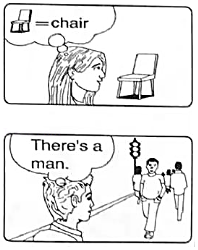
•Look at objects around your home and school, and think of what they are called in English. Try to make a direct connection between the object and the English word.
•When you are out in a public place, practice describing the things and people you see in your mind. For example, think,"There is a man walking down the street. He's wearing a suit.I think he is going to work." Try to think in English first, not in your first language.
•When you have to say something in English, think first and ask yourself," What words and phrases do I know in English that I can use in this situation?" Try not to think in your first language and translate your ideas into English. If you do, you will get frustrated very quickly.
Try these tips and you'll soon find that you are thinking in English.
(1)The passage is most probably written to .
A.students
B.teachers
C.parents
D.reporters
(2)The writer gives some advice on how to .
A.greet people in English
B.practice thinking in English
C.write an article in English
D.improve English listening skills
(3)The passage above might be from the column(栏目)in a magazine.
A.News Corner
B.Story Garden
C.Language World
D.Technology Square
Have you ever eaten a dandelion (蒲公英)? Me neither. Have you ever blown it to make a wish? Me, too.
"Time to pick dandelions, Athena," Mum opened the car door and I entered with a (1) . My hometown is in Greece(希腊), where dandelions are(2) on the menu. But I didn't eat dandelions. Why did I have to(3) them with my family every spring?
Then I said goodbye to my new friend Brigid, whose family had(4) moved in our neighborhood in New York. I was(5) Brigid didn't ask where we were going. Nobody in America ate dandelions. I always worried that(6) would notice us picking dandelions.
We(7) into a wild field. Hundreds of lively yellow flowers appeared everywhere. Then we stopped our car. Dad went over to cut dandelions and put them in his bag. But I just hid in the book. "(8) do we eat dandelions?" I asked. "The best food in the world." Dad answered, shaking a handful of greens.(9) we were ready to leave,we had enough dandelions. On the way home, Mum and Dad talked about hosting a dinner party for the new neighbors to try our (10) Greek food.
The night of the party, Brigid arrived with her parents. Mum served(11) different Greek foods. Our guests ate everything. Finally came the dandelions. "Wait!" I said to Brigid. But it was too(12) . "You ate the dandelions!"I told her. We both(13) , and she ate another bite. "(14) ," she said.
Mum was smiling at us. After dinner, Brigid and I went to the backyard and lay on the grass. The stars reminded me of dandelions in the soft field. I closed my eyes and made a (15) : to be as open﹣minded as my family and my new friend.
|
(1)A.bag |
B.book |
C.menu |
D.flower |
|
(2)A.ever |
B.never |
C.always |
D.hardly |
|
(3)A.pick |
B.plant |
C.watch |
D.water |
|
(4)A.quickly |
B.quietly |
C.finally |
D.recently |
|
(5)A.sad |
B.glad |
C.proud |
D.disappointed |
|
(6)A.anyone |
B.someone |
C.everyone |
D.no one |
|
(7)A.ran |
B.flew |
C.drove |
D.walked |
|
(8)A.How |
B.Why |
C.When |
D.Where |
|
(9)A.When |
B.Since |
C.Unless |
D.Although |
|
(10)A.new |
B.fast |
C.expensive |
D.traditional |
|
(11)A.it |
B.her |
C.him |
D.them |
|
(12)A.late |
B.early |
C.lucky |
D.quick |
|
(13)A.bowed |
B.shook |
C.laughed |
D.greeted |
|
(14)A.Be careful |
B.Never mind |
C.Not bad |
D.You're welcome |
|
(15)A.wish |
B.report |
C.speech |
D.suggestion |

(1)阅读下面短文,从方框中所给的A﹣E五个选项中选择正确的选项(其中一项是多余选项).
|
A. Remember there is hope for everyone! B. Open your eyes and you are ready to go! C. Your mind goes blank! D. Be more silent! E. Well, don't do that! |
Public speaking is one of the top three fears among adults in both the UK and the US. Here are some suggestions that deal with some of the most common problems people experience with public speaking.
Invite the attention in
Do you hate that moment when you stand up in front of a group to speak and everybody looks at you?① . It's a sign that people are interested and want to hear what you have to say. Welcome those looks!
Beat the brain freeze
Have you ever been in the middle of speaking and suddenly……brain freeze!② . It is possible that you forgot something for the moment. And you are holding your breath! All you need to do is to trust yourself, clear your mind, focus and breathe. The thoughts will come rushing back to your mind in no time. Phew!
Increase your confidence
Use this exercise to get in touch with the "naturally confident (自信的) you" inside. Close your eyes and remember a special time you felt really relaxed and confident. Imagine the feeling of relaxation rushing through your whole body. It will pass information to your brain that you are confident and happy.③ Whether you are someone who just wants to move from good to great with your speaking, or someone who feels too afraid to stand up and speak, the great news is that you can move forward, be relaxed, and turn into a great speaker.④
(2)Write down another suggestion on how to become a good speaker. (答案不多于5个单词)
Tani,8 years old,ran away from Nigeria with his family two years ago. (1) they got to the United States,a churchman (2) (warm)helped place them in a homeless shelter(收容所)in New York.Tani's dad worked as a driver.And his mom studied hard(3) (become)a nurse.Tani started going to Primary School 116.There, (4) learned to play the game that would change his life:chess.
On March 10 th,Tani (5) (win)a state champion(冠军)for little kids.He beat 73 other players.Some had practiced with private chess teachers,but Tani had practiced on (6) floor of the homeless shelter alone.
A reporter wrote an article about Tani.In three weeks,thousands (7) people gave away ove﹩250, 000 to Tani and his family on GoFundMe. Some also left (8) (message). "Tani! You are a superstar!" one person wrote.
Recently, Tani and his family (9) (decide) to give away all the money. "Thanks to others' help, we live much (10) (happily) than before" Tani's father, Kayoed, told TIME for Kids. "Now we want to help poor people."
A group of rubbish collectors in Turkey are recycling the books that people have thrown away.They have(1) (已经)created a mobile library.There are now over 9,000 books,which are divided into 20 kinds,including (2) (医学的)care,politics,literature,history,healthy living and soon.The library is inside a (3) (卡车)that tours schools in the countryside.They hope to create a greater passion(热情)for reading books in children, (4) (尤其)in the age of mobile phones and computers.Many schools do not have a reading room or their (5) (自己的)library.
The library has got lots of attention in Turkey.People from all over Turkey are (6) (送)their old books to the library.A(7) (女士)working at the mobile library said,"The interest is growing.Each day we have guests coming here to (8) (借)books or have a quiet time to read."The director of the library said,"We have books here for kids aged from four to (9) (十),and books for older children,like world classics and (10) (诗).We hope that it will develop their love for books."
|
aloud lock behave their low |
(1)Make sure the door is when you leave the room.
(2)It's so cold today.The temperature may be the this winter.
(3)The pain in his leg made him cry .
(4)Mary always so well that every one likes her.
(5)When our washing machine broke,our neighbors let us use .
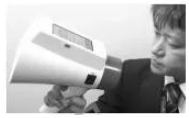
To help Japanese companies better deal with the increasing number of foreigners visiting the country, Panasonic has created a megaphone (扩音器) which is able to smartly translate Japanese into English, Chinese and Korean.
Panasonic named the product "Megahonyaku". It is a term for the Japanese words for "megaphone" and "translate", which actually makes a lot of sense because it's a megaphone that can translate Japanese into several other languages in real time. When a user speaks Japanese into the megaphone, it recognizes (辨认) and translates what is being said immediately, and outputs the words in English, Chinese or Korean.
It sounds amazing, and seeing it in action is wonderful, but Megahonyaku is not good enough. It cannot translate everything you say, as it only stores 300 common expressions, like "The train has been put off" or "Watch your step". However, the Japanese company behind Megahonyaku promises to add new expressions regularly, which users can get on the Internet.
The machine was designed to be used in places like transport stations, airports and places of interest where quick and exact announcements are needed most. Around 30 Japanese organizations, including the police and guides, have been trying out Megahonyaku for about one year, but Panasonic says it will come onto the market on December 20th. Instead of selling these speech translators, Panasonic plans on renting (出租) them out for less than ﹩183 a month on a three﹣year agreement,and offering users future improvements and necessary services.
Panasonic has also said that it may add support for other languages,like Russian,depending on customers' needs.Megahonyaku also includes a touch screen that allows users to choose the language they need their speech translated into.
(1)Panasonic has produced Megahonyaku so that .
A.guides can translate Chinese into Japanesefaster
B.Japanese companies can receive foreigners better
C.foreigners can talk with the Japanese freely
D.the Japanese can learn other languages easily
(2)The third paragraph is mainly about the of Megahonyaku.
A.invention
B.importance
C.disadvantage
D.history
(3)It can be learnt from Paragraph 4that Megahonyaku .
A.may be popular with the police
B.is widely used in private homes
C.will be sold on December 20th
D.stores about 30foreign languages
(4)According to the passage,Panasonic will in the future.
A.sell Megahonyaku to foreign visitors
B.bring down the price of Megahonyaku
C.change the screen of Megahonyaku
D.improve Megahonyaku regularly
A zero﹣waste life is a lifestyle that hardly creates any rubbish. So, a zero﹣waste store is about providing a kind of everyday and pleasant﹣looking zero﹣waste products to help people start on a zero﹣waste life journey.
"Zero waste" or "danshari" was first suggested by a French woman called Bea Johnson. Her idea is: live a life and try not to create any rubbish; use different kinds of ways to save the environment such as stopping the use of one﹣off objects; giving unwanted things to others or giving them away to organizations like the Red Cross.
Yu Yuan, 27, is deeply interested in this idea. She and her boyfriend have lived in Beijing for many years. And earlier she used to buy things without thinking about them carefully until she saw a video about "zero waste", in which a family of four placed the rubbish they produced every year in a jar (罐). After watching the video, Yu wanted to experience this zero﹣waste lifestyle with her boyfriend.
A zero﹣waste life follows the 6R rule﹣Refuse Reduce, Reuse, Repair, Recycle and Rot. Over August﹣October when Yu followed the rule of zero waste 6R, she and her boyfriend Joe Harvey both produced only two cans of rubbish.
Now, the couple have opened a small shop in Beijing, where they use wood products to take the place of plastic ones and cloth bags printed with environmentally friendly logos. Most products sold in the store can be reused. The store also has second﹣hand books and CDs/DVDs with, ideas to make the best of the used things.
"Those who once experienced the non﹣waste lifestyle have slowly changed their ideas," says Ya, "The zero﹣waste lifestyle is not for ascetics (苦行僧). It is just around us at our finger﹣tips." Yu expects some of her friends to join her on the road to zero waste.
(1)Bea Johnson suggests that people should .
A. try to produce no rubbish in life
B. share objects with others
C. help their friends live comfortably
D. work hard for the Red Cross
(2)We can see from the passage that Yu Yuan .
A. offers plastic bags in her store
B. is influenced by the 6R rule
C. often buys things she doesn't need
D. likes listening to CDs very much
(3)What Yu Yuan says in the last paragraph probably means that .
A. lots of people doubt the zero﹣waste lifestyle
B. she feels it hard to continue her lifestyle
C. her friends have followed her lifestyle
D. the zero﹣waste lifestyle is not difficult to live
(4)Which of the following is the best title for the passage?
A. Opening up a second﹣hand store
B. Recycling waste
C. Saving the environment
D. Joining the couple
A British man has learned the skills needed to perform Beijing Opera, making the audience (观众) enjoy his lively performance of the Monkey King.
Ghaffar Pourazar, born in Iran, said he has been a big fan of Bruce Lee since he was a child and is full of interest about China. In 1993, he happened to watch Beijing Opera performed in London by professionals from Jingju Theatre Company of Beijing. Ghaffar said he fell in love with the beautiful voices, colorful costumes, excellent shows and so on. So after one year, he arrived in China alone and became a student of Beijing Opera at a Beijing school.
At the age of 32, he had to learn with teenage students every day, starting from the most basic training of the legs and waist. At the time, he was mostly troubled by the dialogue in Beijing Opera. To him, it was the biggest obstacle. But he never gave up.
Four years later, he began to learn to perform the Monkey King, a traditional character from the Chinese classic story Journey to the West. He said he arrived in the workroom an hour earlier than other performers and also bought books and CDs to better understand the character.
Ghaffar today is not only good a speaking Beijing dialect (方言) but has also built a fame for Beijing Opera. He once got a top international prize for performing the Monkey King.
To help more people enjoy Beijing Opera, Ghaffar often teaches the traditional art form in schools in the United States, Britain and other countries. When he found that the language was difficult to understand, he started to translate Beijing Opera song lyrics. Ghaffar led a group of actors to perform 66 times in a month and a half in the United States. He also led a 48﹣member team to perform in Malaysia. In the past 10 years, he has performed in more than 400 shows.
(1)In the year of 1994, Ghaffar began to .
A. make friends with Bruce Lee
B. take an interest in China
C. learn Beijing Opera in Beijing
D. act the part of the Monkey King
(2)The underlined word "obstacle" in Paragraph 3 probably means " ".
A. chance
B. problem
C. topic
D. dream
(3)It can be inferred from the passage that Ghaffar .
A. is successful in performing Beijing Opera
B. has written some books about Beijing Opera
C. got a prize for translating Journey to the West
D. doesn't need any more members in his team
(4)The passage is most probably from the part of in a newspaper.
A. sports
B. business
C. culture
D. education
EXCITING NEW COMPETITION!
Give your workplace a spring facelift!
Living magazine is offering three prizes of between £10, 000 and £50, 00o to be spent on improving the school, college or office where you spend so many hours each day! If you win, the money will be yours to spend as you wish to make life more pleasant.
Just think! You could spend it on any of the following:
◇improving the look of the place (new wallpaper, tables or pictures).
◇better study places (a computer room, a language laboratory or a small library).
◇improving the outside area(making a garden or a car park for example).
◇better sports places (a small gym or a swimming pool).
To enter, all you have to do is to design:
◇five ways you plan to spend the money if you win.
◇what you want to include(for example, sofas in your new computer room).
◇why these changes will make your workplace a better place to be!
Email us your design at livingmagazine@hotmail.com before June 16th.
If you want to get more information, please contact us:
Tel+323﹣647﹣4200 Fax+323﹣647﹣4245
Don't miss this great chance to improve your workplace!
(1)The text tells us that the new competition .
A. can help you get good grades
B. is organized by Living magazine
C. allows only students to enter
D. provides more than three prizes
(2)Those who want to enter the competition are supposed to .
A. describe how to spend the prize
B. mention the money they have
C. hand in their designs after June 16th.
D. visit Living magazine in person
(3)What kind of writing is the text?
A. An email.
B. A diary.
C. A note.
D. A poster.

A video showing a 12﹣year﹣old boy from Moche, Peru, doing his homework on the sidewalk, under a streetlight, has been watched several million times on Facebook after being (1) by local police.
Staff at the Moche police station first (2) Victor Martin late last month, while checking security cameras (监控摄像). They found a young boy sitting on the sidewalk by (3) at night. At first, they thought he was doing something bad, but later they realized he was (4) writing something in his notebook, taking advantage of the streetlight overhead. Moved by the boy's (5) , the police shared the video on Facebook.
At the time of this writing, Victor's heartwarming and (6) heartbreaking story has spread all around the world. Local TV station(7) to find the boy and sat down with his mother to learn why he was doing his homework on the street instead of at home.
It turns out that the 12﹣year﹣old's family is so (8) that they couldn't pay for electricity (电), so they just depended on a (9) during the night. Unluckily, Victor Martin could (10) finish his homework before the sun went down, and recently he couldn't (11) the weak candlelight any more.
"One day, my son said (12) I continue with the candle, I will be crazy! I'd better go outside to finish my homework, "Rosa Angulo Cordoba told Panamericana TV. She (13) that Victor's neck would often become hard to move because of tilting (倾斜) his head to let the candlelight through.
Victor's mother said that although he (14) housework and takes care of the family sheep every day, the sixth grader takes (15) very seriously and gets good grades.
|
(1)A. shared |
B. taken |
C. discussed |
D. praised |
|
(2)A. met |
B. interviewed |
C. noticed |
D. caught |
|
(3)A. itself |
B. yourself |
C. myself |
D. himself |
|
(4)A. shyly |
B. actually |
C. carelessly |
D. certainly |
|
(5)A. wish |
B. plan |
C. spirit |
D. hobby |
|
(6)A. by the way |
B. at least |
C. at the same time |
D. in the end |
|
(7)A. managed |
B. stopped |
C. promised |
D. refused |
|
(8)A. traditional |
B. popular |
C. special |
D. poor |
|
(9)A. flash |
B. candle |
C. camera |
D. fire |
|
(10)A. seldom |
B. even |
C. only |
D. still |
|
(11)A. change |
B. stand |
C. enjoy |
D. protect |
|
(12)A. Although |
B. Because |
C. If |
D. Until |
|
(13)A. added |
B. warned |
C. hoped |
D. lied |
|
(14)A. puts off |
B. worries about |
C. gives up |
D. helps with |
|
(15)A. health |
B. school |
C. friendship |
D. safety |

It was our school's yearly dancing show. I(1) (be) excited that I was chosen by the teacher this time although I didn't have any experience of dancing for a show. I would dance in front of all the students and (2) (teacher). It made me very proud.
However, I was a bit sad (3) my father had no time to watch me dance. He(4) (invite) to have a business meeting. I knew that my father would surely come to my show if he could. (5) (lucky), my mother and my elder sister were still coming to watch my show.
(6) the beginning of the day, I was very nervous. After changing into the dress and getting my makeup done, I felt (7) (relax). Then I went on to the stage bravely. I was very glad to see my mother and sister sitting in (8) second row.
Just before the lights turned dark, I saw my father rush into the hall and take the seat beside my mother. (9) a pleasant surprise it was! The sight of my father made (10) (I) smile. I began dancing confidently. Soon after the show, my family came backstage to congratulate me. I was so happy and lucky to have my family's support.

 粤公网安备 44130202000953号