阅读短文,从方框中选择适当的词并用其正确形式填空,使短文通顺、意思完整。每空限填一词,每词限用一次。
|
find good drop rope happy fish what it sky look |
Fish for the Moon in the Well(水井)
One evening, a ‘clever’ man, Haojia went to fetch some water from the well. When he ___(1)___ into the well, he found the moon shining in the well. “Oh, Good Heavens, ____(2)____ a pity! The beautiful moon has ____(3)___ into the well!” So he rushed home for a hook(钓钩), and tied it with the ____(4)___, then put it into the well to ___(5)___ for the moon.
After some time of hunting for the moon, Haojia was happy to ____(6)___ that something was caught by the hook. He thought ____(7)___ must be the moon. He pulled hard on the rope. Because of the excessive pulling, the rope broke and Haojia fell on his back. Just then Haojia saw the moon again high in the ____(8)___. He said to himself, “Aha, it finally came back to its place! What a ____(9)___ job!” He was proud of what he did. He told everyone about it ___(10)___, but he didn’t know how silly he was.
After the winter vacation, I had to move to a new city with my parents. On the first day to my new school, it was cold and ____(1)____. I was walking alone slowly ____(2)____ worrying about something in my new school. It was early and there weren’t many people on the road. ___(3)____ a girl who was riding a bike in the snow fell down. She was ___(4)____ hard to stand up but fell again. ___(5)____ thinking, I went over to help her quickly. She said “thank you” with a ___(6)____ and then rode away. Her smile warmed me a lot.
After I got to school, the teacher led me to the classroom and ___(7)____ me to the class. Then he asked me to ___(8)____ down beside a girl. I felt so ___(9)____ that I didn’t dare to look at her. Soon the first class, English, started. Their textbooks were___(10)____from those in my old school. As I was ___(11)____ what to do, an English book appeared in front of me. “Let’s ___(12)____ it.” The girl beside me said, “Hi, I’m Carrie,” I looked up. To ___(13)___ surprise, it was the girl I helped this morning. From ___(14)____ on, we became good friends.
From that I learned: to help ____(15)____ is actually to help ourselves!
(1).
| A. |
cloudy |
B. |
snowy |
C. |
foggy |
D. |
rainy |
(2).
| A. |
so |
B. |
because |
C. |
but |
D. |
and |
(3).
| A. |
Firstly |
B. |
Finally |
C. |
Suddenly |
D. |
Luckily |
(4).
| A. |
trying |
B. |
starting |
C. |
getting |
D. |
walking |
(5).
| A. |
Without |
B. |
With |
C. |
For |
D. |
About |
(6).
| A. |
joke |
B. |
smile |
C. |
laugh |
D. |
cry |
(7).
| A. |
introduced |
B. |
carried |
C. |
showed |
D. |
sent |
(8).
| A. |
fall |
B. |
lie |
C. |
sit |
D. |
turn |
(9).
| A. |
sad |
B. |
happy |
C. |
nervous |
D. |
excited |
(10).
| A. |
easy |
B. |
difficult |
C. |
same |
D. |
different |
(11).
| A. |
doing |
B. |
writing |
C. |
wondering |
D. |
dreaming |
(12).
| A. |
share |
B. |
sing |
C. |
dance |
D. |
play |
(13).
| A. |
her |
B. |
my |
C. |
his |
D. |
its |
(14).
| A. |
today |
B. |
later |
C. |
now |
D. |
then |
(15).
| A. |
any other |
B. |
another |
C. |
the other |
D. |
others |
根据短文内容,从六个选项中选择五个恰当的句子完成短文。
Every year there are endless talks and suggestions on how to protect the environment. As for students, what should we do? ____(1)____
Plant Trees
The most important method to protect the environment is to plant trees. Trees may take longer to grow, but they serve the next generation(一代). __(2)___
Save water
Water is life. What we should do is to save water. ___(3)___ The more time we take, the more water we are likely to use. As we brush our teeth, turn off the tap.
Limit Car Use
__ (4)___ It may not be as comfortable as the car, but we will make a significant contribution to protecting the environment.
Reduce Food Waste
Research shows that food that goes to waste in the world every year, is enough to feed almost a billion hungry people. ___(5)____ We can make a list of the food we are going to buy, and never order much more than we need in the restaurant.
We depend on the environment for living, and the environment depends on us for living as well. As long as we keep on doing the simple things, we can protect the environment better.
| A. |
Reduce the time we take a bath. |
| B. |
Turn off computers and lights which are not in use. |
| C. |
Luckily, there are measures we can take to reduce food waste. |
| D. |
Here are four amazing ways about protecting the environment. |
| E. |
Trees provide shade (阴凉处) and reduce the need for air conditioner. |
| F. |
We can choose biking, walking or public transport instead of a personal car. |
We all know that rice, wheat and corn are staples, but do you know there is another kind of staple food—potatoes? Potatoes have many advantages. They are a good source of vitamin C and potassium(钾). A potato’s vitamin C is as rich as 10 apples. What’s more,potatoes are low in calories(卡路里)-only three fourths of the same amount of wheat and corn, according to People’s Daily. Potatoes are easy to grow. It can be grown in both the north and the south during winter, spring and autumn. The plant is also able to bear drought(干旱). Some areas of China are facing water shortages, so the potato is safe to grow.
With these advantages, having potatoes as a staple food will make our menu more balanced. Now, many Chinese people treat potatoes more like vegetables, and eat them in the form of potatoes cooked with beef. But being a staple food, potatoes can be cooked differently. Scientists have succeeded in making potato flour(粉), noodles and other staple foods similar to those made of rice or wheat.
(1). Which staple is mentioned in the passage?
| A. |
Milk. |
B. |
Beans. |
C. |
Fish. |
D. |
Rice. |
(2). What can we know from People’s Daily?
| A. |
Potatoes are low in calories. |
B. |
China is facing water shortages. |
| C. |
The potato is safe to grow. |
D. |
Potatoes can be cooked differently. |
(3). According to the passage, potatoes can NOT be grown in.
| A. |
spring. |
B. |
summer. |
C. |
autumn. |
D. |
winter. |
(4). What’s the best title for the passage?
| A. |
Potato planting. |
B. |
Potatoes and tomatoes. |
| C. |
The advantages of potatoes. |
D. |
The disadvantages of potatoes. |
Chopsticks originated from(起源于) China. Though simple and little, they are a great invention in the history of humans. There are many legends about Chopsticks, Da Yu and Chopsticks is one of them.
It is said that during Yao and Shun times, Shun ordered Yu to control the flood. One day, Yu took a boat to an island, he was so hungry that he used an earth pot to cook meat. After the meat was well-done in boiled water, he didn’t want to waste time to wait for it to cool, so he took two branches to pick up the meat from the soup. After, to save time, he always took small branches to take out food from the hot pot. For a long time, he was skilled at picking up food with small sticks. In this way, the first types of chopsticks were born.
The chopsticks are made of different kinds of materials including bamboo, wood, animal bone, beautiful stone, and some other materials. There are more than 200 types of chopsticks now, among them, the bamboo chopsticks are most widely used.
“A chopstick can be broken easily, ten pairs of chopsticks hold each other tightly(紧紧地)...”The song is popular with many people, and it always encourages people to work together.
(1). What does the underlined word “them” in Paragraph 1 refer to?
| A. |
Chopsticks. |
B. |
Humans. |
C. |
Legends. |
D. |
Branches. |
(2). How did Da Yu go to an island?
| A. |
On foot. |
B. |
By boat. |
C. |
By bike. |
D. |
By bus. |
(3). Why did Da Yu always take out food with small branches?
| A. |
To save time. |
B. |
To save food. |
| C. |
To save chopsticks. |
D. |
to save money. |
(4). Which of the following is right?
| A. |
Chopsticks aren’t a great invention. |
| B. |
Yu ordered Shun to control the flood. |
| C. |
Ten pairs of chopsticks are easy to break. |
| D. |
The song encourages people to unite as one. |
Terry from Kenya, 62 years old, has spent 20 years in the city he now calls home. Having lived in Beijing for more than 20 years, Terry has finally made his Chinese dream come true—becoming a volunteer.
He is often seen giving tourists directions, getting water for a baby and even helping a neighbor sell cold drinks.
“I like helping other people.” he said,“This is where I live, where my friends are and where I call home.”
Terry became interested in Chinese culture as a teenager when he read the Tao Te Ching by Laozi.
In 1981, he went to Shanghai. His first visit to Beijing was six years later on business. Terry and his family moved to Beijing in 1997, since then he has lived and worked in Beijing. Now Terry can make traditional Beijing bean-paste noodles, and when he goes to a restaurant, he usually orders dumplings and some traditional Beijing dishes.
He likes chatting with local people, especially taxi drivers.
“I am more familiar with the lives of taxi drivers than most Beijingers,” he said,“when I see their license numbers, I can tell how many years they have worked.”
“They are so knowledgeable,” he said, “I learned many Chinese from them.”Terry does not want to leave Beijing. He said. “Your home is where your things are. In this sense, Beijing is my home. Now I just enjoy living here.”
(1). What’s Terry’s Chinese dream?
| A. |
To be a volunteer. |
B. |
To eat dumplings. |
| C. |
To read the Tao Te Ching . |
D. |
To live in Shanghai. |
(2). When did Terry and his family move to Beijing?
| A. |
In 1981. |
B. |
In 1987. |
C. |
In 1997. |
D. |
In 2008. |
(3). Who does Terry especially like to chat with?
| A. |
Shop keepers. |
B. |
His neighbors. |
| C. |
His friends. |
D. |
Taxi drivers. |
(4). What’s the meaning of the underlined word “familiar” in Paragraph 7?
| A. |
厌烦的 |
B. |
陌生的 |
C. |
熟悉的 |
D. |
不同的 |
Welcome to Austria!
Soll is a village in the mountains in western Austria, and the Hotel Post, opened by a local family, is clean and cheap. From the hotel you can see the whole village, the forest and the mountains. The temperatures in summer are usually 20℃ to 25℃ in the daytime, but much cooler by evening.
Have a good trip to Thailand!
When you visit Bangkok in Thailand, don’t miss the early morning river boat trip to the Floating(漂浮的) Market just outside the city. There you will find many kinds of fruits and vegetables, and you can pay for them when you sit in your boat. Don’t forget your hat—the sun can be strong and it may be as hot as 40℃ about midday!
Welcome to Guangzhou!
Guangzhou is a wonderful place for traveling and there are a lot of things to do. You will find many large department stores in the city. You will also find small shops near the train station. In the evening, you can take a boat trip to enjoy the beautiful scenery of Guangzhou from the river. At night, travelers can enjoy eating at food stalls(货摊) on the streets because the food there is cheap and delicious.
(1). How is the Hotel Post?
A. Expensive and big.B. Clean and cheap.
C. Dirty and small.D. Tidy and expensive.
(2). What can you buy from the Floating Market?
A. Flowers.B. Clothes.C. Fruits.D. Shoes.
(3). Where can travelers enjoy delicious food at night?
A. In Soll.B. In Hotel Post.C. In Bangkok.D. In Guangzhou.
请阅读下面对话,根据对话内容从下面七个选项中选择五个填入空白处,使对话通顺、合理,意思完整,一空一句。
(John and his friend Kate are talking on the phone. J=John, K=Kate)
J: Hello?
K: Hi, John! __(1)__ You weren’t at the party last Sunday.
J: I’m on vacation right now.
K: Great! ___(2)___
J: I’m afraid not. It’s an unusual beach. In my opinion, the fewer people, the better.
K: ___(3)___
J: That’s true. The sun is shining brightly and the sea is so beautiful.
K: ___(4)___
J: Nothing much. I just read and rest every day. In fact, I was asleep before your call.
K: Oh, I’m sorry. ___(5)__
J: Thanks. See you next week.
| A. |
Where are you? |
| B. |
That sounds nice. |
| C. |
Is it a place I know? |
| D. |
Have a great vacation. |
| E. |
Many people at the party? |
| F. |
What’s the weather like there? |
| G. |
Did you do anything special there? |
请先阅读下面短文,掌握其大意,然后根据短文内容从下面七个选项中选择五个还原到文中,使短文意思通顺、结构完整,并在答题卡上将其序号涂黑。一空一句。
Silk, the word itself is beautiful. The story of silk started in China over 4,000 years ago. It says a silkworm’s cocoon(蚕茧) fell into a woman’s teacup. It then opened into a single, unbroken thread (线).___(1)___ The Chinese learned they could use the cocoons to make cloth that was both beautiful to look at and soft to touch.
___(2)___ In other countries, silk was valuable and not often seen. Often it was worth more than gold. It’s said that the secret finally got out when a princess left China to go to India. In her hair, she secretly carried many silkworms.
By the year 1 A. D., silk was sold as far west as Rome, and all along the Silk Road. ___(3)___ Centuries later, in 1522, the Spanish brought silkworms to Mexico.
Nowadays people around the world still make many beautiful things from silk. Silk isn’t only beautiful. It seems that it’s easy to break. ___(4)___ For example, it has been used to make bicycle tires(轮胎). And some doctors even use silk threads in the hospital. ___(5)___ This makes it great for clothes like winter jackets, pants, and shoes.
All of this from a little insect—the silkworm. That is the miracle(神奇) of silk.
| A. |
Actually it’s very strong. |
| B. |
Silk is also light and warm. |
| C. |
This was an important discovery. |
| D. |
The woman became famous and popular. |
| E. |
A princess started the silk trade between China and India. |
| F. |
Making silk was a protected secret in China for many years. |
| G. |
Around the year 300, silk also traveled from China to Japan. |
Improvements in technology often happen overnight. Some gadgets get smaller and faster. Others are replaced (代替) by newer things like smartphones. They can do hundreds of things. Here are some old gadgets that people used to use.
①________
Do you have a landline at home? These are phones that people plug (插入) into their living room walls. Mobile phones didn’t use to be so common at that time, so most families had a landline. But landlines only worked at home. What did people do when they were outside and needed to call someone? They looked for a pay phone! Then, most people had their own mobile phones and many homes no longer had landlines.
②________
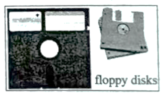
People today store plenty of information online, or on SD cards. But in the 1980s and 1990s, people used to use floppy disks. The first floppy disks were large, expensive, and not very useful — each disk could store just 175 KB of information! Later, floppy disks got smaller and better. But even the best ones could only hold 1.44 MB. You would need three or four disks just for one song, and about 22,000 disks to match the storage (储存空间) available on a 32 GB phone!
③________
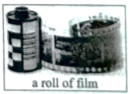
It’s easy to take photos today. People often have thousands just on their phones! But photos used to be expensive, and people took fewer of them. To take a photo, you had to buy a roll of film. This allowed you to take about 30 photos. After finishing the roll, you left it at a shop. The shop developed the photos to make them be seen, which you could collect after a few days.
Technology changes all the time, and the gadgets we use today will one day be old. What do you think will be next to disappear?
(1). What does the underlined word “gadgets” mean in Paragraph 1?
| A. |
Toys. |
B. |
Tools. |
C. |
Games. |
D. |
Phones. |
(2). Match the title with each paragraph.
a. Goodbye Disks b. Music to My Ears c. Picture This d. Call Me e. Film Development
| A. |
①-d, ②-b, ③-e |
B. |
①-d, ②-a, ③-c |
C. |
①-c, ②-a, ③-b |
D. |
①-c, ②-b, ③-e |
(3). What were the first floppy disks like?
| A. |
They could store much. |
B. |
They were very useful. |
| C. |
They cost a lot of money. |
D. |
They were easy to carry. |
(4). What can we get from the passage?
| A. |
It was convenient to take photos with film. |
| B. |
People outside used landlines to call someone. |
| C. |
Improvements in technology change people’s life. |
| D. |
For a time, many people had pay phones at home. |
(5). What would be the best title for the passage?
| A. |
The Changing Phones. |
B. |
The Products of Tomorrow. |
| C. |
Old Things We Use Today. |
D. |
The Things We Used to Use. |
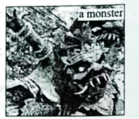
Indonesians love to celebrate. They believe that celebrating and eating together brings good luck. Let’s party Indonesia-style.
Would you be surprised to find a New Year’s Day in March? Indonesians on the island of Bali are getting ready to ring in Nyepi, their New Year. It falls in March or April on the night of the new moon and is a symbol of a fresh start for the people and the island of Bali. On the eve of Nyepi, families and friends get together in the market. They carry a huge monster which is made of wood and other materials around the village three times. After that, people set it on fire, hoping to drive out evil (邪恶的) spirits.
After Nyepi, a Turun tanah ceremony begins in honor of a child’s first steps. At the Turun Tanah, parents invite friends and family to a party to introduce the baby. They put different objects such as a bracelet (手镯), pen, mirror or toy computer around their baby. If the baby picks up a pen, he or she may be a writer. A child who picks up a gold bracelet may be rich.
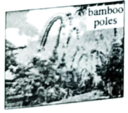
While Turun tanah celebrates the future of a family. Galungan celebrates its past. Ancestors who have died return ‘home’ during this ten-day celebration. And living relatives do their best to make them happy. Tall bamboo poles line the street. People attend the ceremonies and visit their family and village temples. Actors and dancers give performances that tell stories of good fighting against evil.
A year of festivals has come to an end. Don’t worry: next year, Indonesia will be buzzing (发出嗡嗡声) again with celebrations, so welcome to the party!
(1). What’s the theme (主题) of the passage?
| A. |
Celebrations. |
B. |
Feelings. |
C. |
Family. |
D. |
Health. |
(2). What do people do during Galungan? Check and choose the right answer.
①Watch performances. ②Discuss new babies’ future.
③Visit their family and village temples. ④Put the bamboo poles along the street.
⑤Carry a huge monster around the village.
| A. |
①②⑤ |
B. |
①③④ |
C. |
②③④ |
D. |
③④⑤ |
(3). Which of the following is TRUE according to the passage?
| A. |
The baby who picks up a pen may be a writer. |
| B. |
Nyepi usually comes after Turun tanah in Bali. |
| C. |
New Year’s Day in Indonesia begins in February. |
| D. |
People fire bamboo poles to drive away the monster. |
(4). Which of the following best shows the structure of the passage?
| A. |
|
B. |
|
C. |
|
D. |
|
(5). What is the writer’s purpose according to the passage?
| A. |
To welcome us to the festivals. |
B. |
To show us how to treat the ancestors. |
| C. |
To tell us how to hold the party. |
D. |
To teach us how to fight against the evil. |
Why is the sea salt? Long before we discovered scientific ways of thinking about it, we explained it in a story. Even though the answer isn’t scientific, it holds some other truth in it — especially about the human heart.
Long ago, a poor old couple lived on the coast. One day, an old storyteller came to their village. The old couple gave him a meal. In return, he gave them a coffee mill (磨粉机) and said, “Say, ‘Mill, please grind (磨粉)’,” and it’ll make whatever you want, to stop it, say ‘Mill, please cease (停止) grinding’.”
Soon the old couple had a much better life. They’d been happy people, and they didn’t need much more. But the young couple next door were never satisfied. When they saw the old couple wearing good clothes and buying good food, they burnt with envy (羡慕). So one day, the young husband went to the old couple’s house secretly and heard, “Mill, please grind hot chocolate!” He was surprised to see it coming out.
Then the young couple stole the mill from the old couple. With it, they rode a horse and set off down the coast, where no one would know them. Along the way, the husband showed proudly and asked, “What do you want it to make?” “Oh. I don’t know. Why not salt?” the wife said. “Mill, please grind salt!” he said. “It works!” the wife shouted. But then they noticed the salt went everywhere. “Make it stop,” the wife said. But the husband didn’t know how. “Mill, please stop grinding! Please, no more!” His words didn’t work. The mill kept grinding. Finally, the young husband threw the mill into the sea as far as he could.
And there it’s been, for hundreds of years, endlessly grinding salt. That’s why the sea is salt.
(1). The passage is probably a(n) ________.
| A. |
folk story |
B. |
instruction |
C. |
science fiction |
D. |
science report |
(2). Put the things happened to the mill in correct order.
a. It began to produce salt. b. The young husband threw it.
c. The young couple stole it. d. The old couple got it.
| A. |
b-d-a-c |
B. |
b-a-d-c |
C. |
d-a-c-b |
D. |
d-c-a-b |
(3). What does the underlined word “it” in Paragraph 4 refer to?
| A. |
The coffee. |
B. |
The horse. |
C. |
The mill. |
D. |
The chocolate. |
(4). How did the young husband’s feelings change?
| A. |
sorry — sad — excited |
B. |
thirsty — excited — afraid |
| C. |
happy — nervous — proud |
D. |
surprised — thankful — happy |
(5). What does the word “truth” in Paragraph 1 imply (暗指)?
| A. |
Being patient. |
B. |
Working properly. |
C. |
Being satisfied. |
D. |
Listening carefully. |
|
●Gift shop Open Daily 10:00 a.m.—5:30 p.m. ●Children’s playground and activity area ●Visitors may adopt (领养) a rescued animal for free!
Admission: Adults: $7 Children (up to 16): $5 Children (3 & under): Free Family (2 adults & 2 children): $20 FREE CAR AND COACH PARK. TOILET FOR THE DISABLED AND WHEELCHAIR ACCESS (通道) IN ALL AREAS. |
(1). When can the visitors buy the gifts?
| A. |
At 9:30 a.m. |
B. |
At 11:00 a.m. |
C. |
At 6:00 p.m. |
D. |
At 10:00 p.m. |
(2). How much is a ticket for a 15-year-old boy?
| A. |
$5. |
B. |
$7. |
C. |
$12. |
D. |
$20. |
(3). What do we know about the museum?
| A. |
It doesn’t provide a free parking lot. |
B. |
The animals there can’t be adopted. |
| C. |
It offers the disabled special service. |
D. |
Children under 3 are not welcome there. |
请先阅读下面短文,掌握其大意,然后用方框中所给词的适当形式填空,并将答案填写到答题卡的相应位置。每个词限用一次。
|
desert; space; heavy; be; when; woman; Chinese; love; hot; see; then |
Wang Yaping is an astronaut. In 2013, she became the second Chinese woman to travel to ___(1)___. She is also famous for a physics class televised for more than 60 million people.
Wang trained very hard for many years ___(2)___ an astronaut. The hardest part was ___(3)___ training. Wearing a spacesuit and carrying special and ___(4)___ equipment(装备), she walked several kilometers through the ___(5)__ and sandy desert. “Sometimes it was so windy and dusty(布满灰尘的),” she says, “that we couldn’t __(6)__ each other even though we were just a few meters away.”
Wang __(7)___ her job. She remembers watching the first __(8)__ astronaut go into space. “I was so proud and also very excited. But __(9)__ I watched it, a thought came into my mind: We have men pilots and women pilots; and __(10)__ a man astronaut. When will there be a __(11)__ astronaut? And today, it’s me becoming one of the first few.”
Sit With Us
You’re at your new school. It’s lunch time, but you don’t have anyone to sit with. You want to join someone at their table, ___(1)___ you’re not sure if they’re friendly. What do you do? Natalie’s ___(2)___ of solving the problem was to create an app. She knows what it feels like to be alone at a new school. She found it difficult to make new friends and had to ___(3)___ a new table at lunch every day. If she sat ___(4)___, she felt lonely. But if she asked to join someone and was __(5)__, she felt embarrassed. She created a lunch-planning app to help students like ___(6)___ find people to have lunch with.
The app — called Sit With Us — is ___(7)__. If a student is having lunch in the afternoon, he or she can create an invitation. Other students can open the app and __(8)___ that invitation. They can then use the app to decide when and where to ___(9)___. This allows students to make ___(10)___ online instead of face-to-face. This is the reason why it works so _ (11)__: it lowers the risk of being refused, and the embarrassment that goes along with it.
Natalie is __(12)__ to see that people are replying to her app actively — especially those who suffer from bullying (遭受欺凌). Soon after she made her app available to the public, she won a prize for it. She __(13)__ appeared in many news stories.
Natalie was even asked to speak at a university. In her ___(14)__, Natalie wanted people to know that you don’t have to do something ___(15)___ to change lives. Sometimes, a simple thing — like having a friend to enjoy lunch with — can make all the difference.
(1).
| A. |
so |
B. |
or |
C. |
for |
D. |
but |
(2).
| A. |
habit |
B. |
course |
C. |
method |
D. |
question |
(3).
| A. |
search for |
B. |
fix up |
C. |
give out |
D. |
get away from |
(4).
| A. |
on time |
B. |
in a hurry |
C. |
by herself |
D. |
in public |
(5).
| A. |
called |
B. |
refused |
C. |
discussed |
D. |
believed |
(6).
| A. |
us |
B. |
it |
C. |
her |
D. |
them |
(7).
| A. |
cheap |
B. |
simple |
C. |
private |
D. |
noisy |
(8).
| A. |
miss |
B. |
make |
C. |
send |
D. |
accept |
(9).
| A. |
stop |
B. |
study |
C. |
meet |
D. |
exercise |
(10).
| A. |
plans |
B. |
trouble |
C. |
reports |
D. |
dinner |
(11).
| A. |
late |
B. |
well |
C. |
hard |
D. |
loudly |
(12).
| A. |
upset |
B. |
sorry |
C. |
happy |
D. |
angry |
(13).
| A. |
also |
B. |
just |
C. |
still |
D. |
seldom |
(14).
| A. |
book |
B. |
talk |
C. |
school |
D. |
picture |
(15).
| A. |
big |
B. |
new |
C. |
similar |
D. |
enjoyable |




 粤公网安备 44130202000953号