Richie Kraus thinks all kids should receive birthday presents. And he's willing to give up his own presents to make that happen.
When Richie was six, he helped collect holiday gifts for children whose families couldn't afford presents. He started thinking about how much he liked getting presents on his birthday. He asked his mom, "If we get kids presents during the holidays, who gets them presents on their birthdays?"
Richie wanted to raise money for those birthday presents. So his mom helped him create the 2U Fund. The name 2U came from the well-known song "Happy Birthday to You."
Richie explains how the fund works: "On our birthdays, we ask our friends to make a donation instead of giving us presents." Richie attaches a special sticker to his party invitations. The sticker tells about the 2U Fund and invites guests to participate, Richie and his mom then give the money to a local charity that has agreed to partner with them. The people at the charity make sure the donations go toward birthday presents for kids in need.
Richie has had three 2U parties. "It just feels really, really good to help other kids," he says.
Richie has encouraged others to try giving up some of their birthday presents to help others. His younger brother, Max, had a 2U party. Some of Richie's friends did, too. He also spoke about the idea at a summer camp and at a school assembly (集会). "There were close to 200 students and teachers in the assembly," Richie' s teacher, Janel McCormick, says. "They all wanted to help support 2U."
Since Richie and his family started the 2U Fund, dozens of kids have helped raise more than $7,000. That money has bought dolls, books, and many other birthday toys for kids in need.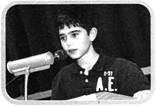
Before Richie created the 2U Fund, he .
| A.had very few friends |
| B.had done some charity work |
| C.had seldom received birthday presents |
| D.had already donated some birthday presents |
To help kids in need, Richie' s 2U parties mainly .
| A.hold birthday parties for them |
| B.invite them to attend the parties |
| C.prepare birthday presents for them |
| D.raise money for their birthday presents |
What can we learn from the last two paragraphs?
| A.All of Richie' s schoolmates plan to hold 2U parties. |
| B.Richie is praised for his kindness. |
| C.Richie' s acts of kindness have spread. |
| D.Richie has made more friends. |
I was brought up in the British, stiff upper lip style. Strong feelings aren’t something you display in public. So, you can imagine that I was unprepared for the outpouring of public grief(悲伤) at a Chinese funeral.
My editorial team leader died recently after a short illness. He was 31. The news was so unexpected that it left us all shocked and upset. A female colleague burst into tears and cried piteously at her desk. Somehow we got through the day's work. The next day was the funeral.
Our big boss stepped forward to deliver a eulogy and was soon in tears. She carried on, in Chinese of course, but at the end said in English: "There will be no more deadlines for you in heaven." Next came a long-term colleague who also dissolved in tears but carried on with her speech despite being almost overcome by emotion. Then a close friend of the dead man paid tribute(哀悼), weeping openly as he spoke. Sorrow is spreading. Me and women were now sobbing uncontrollably. Finally, the man's mother, supported between two women, addressed her son in his coffin. At one point, the mother almost collapsed and had to be held up. We were invited to step forward to each lay a white rose on the casket. Our dead colleague looked as if he was taking a nap. At the end of the service I walked away from the funeral parlor stunned at the outpouring of emotion.
In the UK, families grieve privately and then try to hold it together and not break down at a funeral. Here in China it would seem that grieving is a public affair. It strikes me that it is more cathartic to cry your eyes out than try to keep it bottled up for fear of embarrassment, which is what many of us do in the West.
Afterwards, a Chinese colleague told me that the lamenting at the funeral had been restrained(克制) by Chinese standards. In some rural areas, she said, people used to be paid to mourn noisily. This struck me like something out of novel by Charles Dickens. But we have all seen on TV scenes of grief-stricken people in Gaza and the West Bank, in Afghanistan, Iraq and the relatives of victims of terrorist bombings around the world. Chinese grief is no different. I realized that it's the reserved British way of mourning that is out of step with the rest of the world.
It was our newspaper's production day. We were bussed back to the office to resume work. No more deadlines for our former colleague, but we had to pull together to put the newspaper to print. The boss invited the team to go out for dinner after work. We relaxed, smiled, joked. There was no mention of the funeral or our poor colleague. Enough sorrow had been shed already. We needed a break.The underlined words “stiff upper lip style” mean “”.
| A.cold-blooded | B.warm-hearted |
| C.self-controlled | D.light-hearted |
At the funeral, .
| A.five individuals made speeches |
| B.the boss’s speech was best thought of |
| C.everyone was crying out loudly |
| D.the writer was astonished by the scene |
According to the writer, people in the West.
| A.are not willing to be sad for the dead |
| B.prefer to control their sadness in public |
| C.cry their eyes out at the public funeral |
| D.have better way to express sadness |
It is implied that .
| A.the English might cry noisily for the dead in Dickens’ time |
| B.Chinese express their sadness quite unlike other peoples |
| C.victims of terrorist bombings should be greatly honored |
| D.English funeral culture is more civilized than the others |
This passage talks mainly about .
| A.an editor’s death | B.bad funeral customs |
| C.western ways of grief | D.cultural differences |
Ray’s wedding had gone off smoothly. Everyone seemed to have had a good time. A few people had too good a time; they went home with designated (指派的) drivers. All evening, the gift table remained unguarded. Who would steal anything, Ray thought. He had never heard of such a thing happening at a wedding. But his best friend Aaron said there was a first time for everything. He walked out regularly from the inside festivities to check on the gift table, making sure no one doubtful was hanging around it.
Ray and Julia went on a 3-week honeymoon to Italy right after the wedding. When they got back, they opened all the gifts and sent out thank-you notes. But there was one problem. A married couple that used to be good friends had obviously given nothing. This surprised Julia, because Walt and Mary said they were excited to be invited. And, they actually seemed to have had a great time at the wedding. Frankly, Ray didn’t even care if they hadn’t given a gift. He just needed to know whether to send a thank-you note. Ray called Aaron. Aaron said maybe Walt had left an envelope on the gift table like Aaron had. “Yes, but we got your envelope with the cash inside,” Ray said.
“Maybe my envelope looked too thin, and some thief thought Walt’s envelope looked nice and fat.”
Aaron asked Ray if he had looked everywhere for Walt’s gift. Had he called up the wedding site to see if anything had been left behind? Ray said that he had looked everywhere and made a lot of calls that were fruitless.
Ray didn’t know what to do. If he sent Walt and Mary a thank-you note for a gift they hadn’t given, they would be insulted. If he didn’t send them a thank-you note for a gift they had given, they would get angry.
“What would you do?” Ray asked. Aaron said he would call Walt up and tell him the problem.
“You can’t go wrong with simply being honest,” Aaron said.
“Oh, yes, you can,” Ray contradicted (反驳) him. “Sometimes it’s best to let sleeping dogs lie.” But he thought about it, and finally decided that Aaron was right. He called Walt and told him the problem. Walt said that yes, he had given an envelope. In fact, the envelope contained $500 cash.
“$500?!” Ray asked. “That’s a lot of cash, Walt!” Walt admitted that it was, but he had gotten a fat raise early that year and Ray’s was the only wedding he’d been to in quite a while. Ray thanked him very much, and apologized sincerely for someone stealing Walt’s generous gift. Walt told him that it was “only money”.
When Ray told Aaron about Walt’s gift, Aaron laughed. “The only thief at the wedding was Walt! I stopped playing cards with him last year because I caught him cheating. And it was only a $10 pot! I’m sure I told you about that.”
“Yes, you did tell me,” Ray said. But, of course, he had to send Walt a thank-you note anyway.Which of the following is true according to the passage?
| A.Aaron looked on honesty as the best policy. |
| B.Walt had surely gotten a fat raise early that year. |
| C.Stealing had never happened at a wedding. |
| D.Nobody checked on the gift table all evening. |
The underlined word “insulted” in Paragraph 5 probably means ______.
| A.deeply impressed | B.much discouraged |
| C.badly hurt | D.greatly moved |
What kind of person is Ray?
| A.Friendly and optimistic. | B.Doubtful and experienced. |
| C.Outgoing and stubborn. | D.Thoughtful and polite. |
Which of the following might be the best title for the passage?
| A.A Wedding Party |
| B.The Wedding Gift |
| C.The Thief at the Wedding |
| D.A Secret at the Wedding |
阅读下面短文并回答问题,然后将答案写到答题卡相应的位置上(请注意66至70四个小题后面的词数要求;每题2分,共10分)。
[1]Ashley Power’s mother bought a computer for her when she was eight. When she was thirteen, she was surfing the Internet regularly, but she couldn’t find anywhere for teenagers to meet and talk. And one day she thought, “If I had my own website, I’d make it a really interesting site for teenagers.”
[2]So, when Ashley was sixteen, she launched her own website, called GooseHead. She had no idea how big a success it would be, but three years later, the site was the most successful teen site in the USA! It was getting 100,000 hits every day, and Ashley had about 30 employees.
[3]After a few years, the website closed down. Then Ashley, who lives in Los Angeles, was asked to write a book called The GooseHead Guide to Life. The book is about how to design a website and start a business. It begins with a section called “All About Ashley,” where Ashley tells readers what it is like to be the boss of a company when you are only sixteen. “I was so happy. But it was crazy in a lot of ways. I got very stressed. I mean, I was only sixteen—I didn’t even have a car! If you were sixteen and you had your own company, you’d be stressed, too!”
[4]In an interview Ashley gave advice to teenagers who wanted to start their own business, “Just be strong and have your dreams and work hard at them. And don’t listen when, because I heard ‘no’ a lot. Just keep going until you hear ‘yes’!”For what purpose did Ashley create GooseHead? (within 10 words)
_________________________________________________What is the main idea of Paragraph 2? (within 6 words)
_____________________________________________________According to Paragraph 3, what did Ashley do after GooseHead closed down?(within 10 words)
_________________________________________________How did Ashley feel as a young boss of a company?(within 5 words)
___________________________________Fill in the blank in Paragraph 4 with proper words.
______________________________________
Elizabeth Freeman was born about 1742 to African American parents who were slaves. At the age of six months she was acquired, along with her sister, by John Ashley, a wealthy Massachusetts slaveholders. She became known as “Mumbet” or “Mum Bett.”
For nearly 30 years Mumbet served the Ashley family. One day, Ashley’s wife tried to hit Mumbet’s sister with a spade(铁锹). Mumbet protected her sister and took the blow instead. Angry, she left the house and refused to come back. When the Ashleys tried to make her return, Mumbet turned to a lawyer, Theodore Sedgewick. With his help, Mumbet sued(起诉) for her freedom.
While serving the Ashleys, Mumbet had listened to many discussions of the new Massachusetts laws. If the laws said that all people were free and equal, then she thought it should apply to her. Eventually, Mumbet won her freedom—the first slave in Massachusetts to do so under the new law.
Strangely enough, after the trial, the Ashleys asked Mumbet to come back and work for them as a paid employee. She refused and instead went to work for Segdewick. Mumbet died in 1829, but her spirit lived on in her many generations. One of her great-grandchildren was W.E.B. Du Bois, one of the founder of the NAACP, and an important writer and spokesperson for African American civil rights.
Mumbet’s tombstone still stands in the Massachusetts cemetery where she was buried. It reads, in part: “She was born a slave and remained a slave for nearly thirty years. She could neither read nor write, yet in her own area she had no superior or equal.”What do we know about Mumbet according to Paragraph 1?
| A.She was born into a rich family. |
| B.She was a slaveholder. |
| C.She was born a slave. |
| D.She had a famous sister. |
What did Mumbet do after the trial?
| A.She founded the NAACP. |
| B.She went to live with her grandchildren. |
| C.She continued to serve the Ashleys. |
| D.She chose to work for a lawyer. |
What did Mumbet learn from discussions about the new constitution?
| A.How to be a good servant. |
| B.How to apply for a job. |
| C.She should always obey her owners’ orders. |
| D.She should be as free and equal as whites. |
What is the text mainly about?
| A.A trial that shocked the whole world. |
| B.The life of a brave African American woman. |
| C.A story of a famous writer and spokesperson. |
| D.The friendship between a lawyer and a slave. |
When I was 11, I had an enemy, a girl who liked to point out my shortcomings(缺点). Week by week her list grew: I was very thin, I wasn’t a good student, I talked too much, I was too proud, and so on. I tried to hear all this as long as I could. In the end, I became so angry that I ran to my father with tears in my eyes.
He listened to me quietly, then he asked. “Are the things she says true or not? Janet, didn’t you ever wonder what you’re really like? Well, you now have that girl’s opinion. Go and make a list of everything she said and mark the points that are true. Pay no attention to the other things she said.”I did as he told me. To my great surprise, I discovered that about half the things were true. Some of them I couldn’t change (like being very thin), but a good number I could—and suddenly I wanted to change. For the first time I go to fairly clear picture of myself.
I brought the list back to Dad. He refused to take it.” That’s just for you,” he said.
“You know better than anyone else the truth about yourself. But you have to learn to listen, not just close your ears in anger and feeling hurt. When something said about you is true, you’ll find it will be of help to you. Our world is full of people who think they know your duty. Don’t shut your ears. Listen to them all, but hear the truth and do what you know is the right thing to do.”
Daddy’s advice has returned to me at many important moments. In my life, I’ve never had a better piece of advice.What did the father do after he had heard his daughter’s complaint?
| A.He told her not to pay any attention to whatever”enemy”had said. |
| B.He criticized (批评) her and told her to overcome her shortcomings. |
| C.He told her to write down all that her” enemy” had said about her and pay attention only to the things that were true. |
| D.He refused to take the list and have a look at it. |
What does “Week by week her list grew” mean?
| A.Week by week, my shortcomings grew more serious. |
| B.She had made a list of my shortcomings and she kept on adding new ones to it so that it was growing longer and longer. |
| C.I was having more and more shortcomings as time went on. |
| D.Week by week she discovered more shortcomings of mine and pointed them out to me. |
Why did her father listen to her quietly?
| A.Because he wasn’t quite sure which girl was telling the truth. |
| B.Because he had been so angry with his daughter’s shortcomings that he wantedto show this by keeping silent for a while. |
| C.Because he knew that his daughter would not listen to him at that moment. |
| D.Because he believed that what her daughter’s “enemy” said was mostly true. |
Which do you think would be the best title for this passage?
| A.The Best Advice I’ve Ever Had |
| B.Not an Enemy,but the Best Friend |
| C.My Father |
| D.My Childhood |
Florence Nightingale was born in a rich family. When she was young she took lessons in music and drawing, and read great books. She also traveled a great deal with her mother and father.
As a child she felt that visiting sick people was both a duty and a pleasure. She enjoyed helping them.
At last mind was made up. “I’m going to be a nurse,” she decided.
“Nursing isn’t the right work for a lady,” her father told her.
“Then I will make it so”, she smiled. And she went to learn nursing in Germany and France.
When she returned to England, Florence started a nursing home. During the Crimean War in 1854 she went with a group of thirty eight nurses to the front hospitals. What they saw there was terrible. Dirt and death were everywhere to be seen — and smelled. The officer there did not want any woman to tell him how to run a hospital, either. But the brave nurse went to work.
Florence used her own money and some from friends to buy clothes, beds, medicine and food for the men. Her only pay was in smiles from the lips of dying soldiers. But they were more than enough for this kind woman.
After she returned to England, she was honored for her services by Queen Victoria. But Florence said that her work had just begun. She raised money to build the Nightingale Home for Nurses in London. She also wrote a book on public health, which was printed in several countries.
Florence Nightingale died at the age of ninety, still trying to serve others through her work as a nurse. Indeed, it is because of her that we honor nurses today.When she was a child, Florence _______.
| A.loved to travel very much |
| B.knew what her duty in life was |
| C.loved to help the sick people |
| D.want to learn music and drawing in the future |
During the Crimean War in 1854, Florence served in the front hospital where _______.
| A.she earned a little money |
| B.work was very difficult |
| C.few soldiers died because of her work |
| D.she didn’t have enough food or clothes |
Why was Florence honored by Queen Victoria?
| A.She built the Nightingale Home for Nurses. |
| B.She wrote a book on public health. |
| C.She worked as a nurse all her life. |
| D.She did a great deal of work during the Crimean War. |
The passage can best be described as _______.
| A.the life story of a famous woman |
| B.a description of the nursing work |
| C.an example of successful education |
| D.the history of nursing in England |
Driving to a friend’s house on a recent evening, I was attracted by the sight of the full moon rising just above my friend’s rooftop. I stopped to watch it for a few moments, thinking about what a pity it is that most city people --- myself included --- usually miss sights like this because we spend most of our lives indoors.
My friend had also seen it. He grew up living in a forest in Europe, and the moon meant a lot to him then. It had touched much of his life.
I know the feeling. Last December I took my seven-year-old daughter to the mountainous jungle of northern India with some friends. We stayed in a forest rest house with no electricity or running hot water. Our group had campfires outside every night, and indoors when it was too cold outside. The moon grew to its fullest during our trip. Between me and the high mountains lay three or four valleys. Not a light shone in them and not a sound could be heard. It was one of the quietest places I have ever known, a bottomless well of silence. And above me was the full moon, which struck me deeply.
Today our lives are filled with glass, metal, plastic and fiber-glass. We have television,
cell phones, pagers, electricity, heaters and ovens and air-conditioners, cars, computers.
Struggling through traffic that evening at the end of a tiring day, most of it spent indoors, I thought, “Before long, I would like to live in a small cottage. There I will grow vegetables and read books and walk in the mountains. And perhaps write, but not in anger. I may become an old man there, and wear the bottoms of my trousers rolled and measure out my life in coffee spoons. But I will be able to walk outside on a cold silent night and touched the moon.”The best title for the passage would be _________.
| A.Touched by the Moon | B.The Pleasures of Modern Life |
| C.A Bottomless well of Silence | D.Break away from Modern life |
The writer felt sorry for himself because __________.
| A.there was too much pollution. |
| B.he failed to see the fullest moon. |
| C.he didn’t adapt to modern inventions |
| D.there were too many accidents on the road. |
What impressed the writer most in the mountainous jungle of northern India?
| A.No modern equipment. | B.Complete silence. |
| C.The nice moon. | D.The high mountain. |
Modern things are mentioned mainly to ___________.
| A.show that the writer likes city life very much. |
| B.tell us that people greatly benefit from modern life. |
| C.explain that people have less chances to enjoy nature. |
| D.show that we can also enjoy nature at home through them. |
The author wrote the passage to __________.
| A.express the feeling of returning to nature. |
| B.show the love for the moonlight. |
| C.advise modern people to learn to live. |
| D.want to communicate longing for modern life. |
Raised in a fatherless home,my father was extremely tightfisted towards us children. His attitude didn’t soften as I grew into adulthood and went to college. I had to ride the bus whenever I came home. Though the bus stopped about two miles from home,Dad never met me,even in severe weather. If I grumbled,he’d say in his loudest father-voice,“That’s what your legs are for!”
The walk didn’t bother me as much as the fear of walking alone along the highway and country roads. I also felt less than valued that my father didn’t seem concerned about my safety. But that feeling was canceled one spring evening.
It had been a particularly difficult week at college after long hours in labs. I longed for home. When the bus reached the stop,I stepped off and dragged my suitcase to begin the long journey home.
A row of hedge(树篱)edged the driveway that climbed the hill to our house. Once I had turned off the highway to start the last lap of my journey,I always had a sense of relief to see the hedge because it meant that I was almost home. On that particular evening,the hedge had just come into view when I saw something gray moving along the top of the hedge,moving toward the house. Upon closer observation,I realized it was the top of my father’s head. Then I knew,each time I’d come home,he had stood behind the hedge,watching,until he knew I had arrived safely. I swallowed hard against the tears. He did care,after all.
On later visits,that spot of gray became my watchtower. I could hardly wait until I was close enough to watch for its secret movement above the greenery. Upon reaching home,I would find my father sitting innocently in his chair. “So! My son,it’s you!” he’d say,his face lengthening into pretended surprise.
I replied,“Yes,Dad,it’s me. I’m home.”What does the underlined word “grumbled” in Paragraph 1 probably mean .
| A.Accepted happily. |
| B.Explained clearly. |
| C.Agreed willingly. |
| D.Spoke unhappily. |
What made the author feel upset was ______.
| A.the tiredness after long hours in labs |
| B.the fear of seeing something moving |
| C.the feeling of being less than valued |
| D.the loneliness of riding the bus home |
The author’s father watched behind the hedge because ______.
| A.he was concerned about his son’s safety |
| B.he wanted to help his son build up courage |
| C.he didn’t want to meet his son at the doorway |
| D.he didn’t think his son was old enough to walk alone |
Which of the following can be the best title for the text
| A.My Father’s Secret. |
| B.The Life of My father. |
| C.Terrible Journey Home. |
| D.Riding Bus Alone. |
There are many brands of chocolate. If you love it, you can’t forget DOVE -- the most famous chocolate brand. But do you know what the meaning of DOVE is?
Dove chocolate is born because of . One day in 1919 Princess Bazaar of Luxembourg's royal family first met the royal kitchen helper Leon. Many nights Leon slipped into the kitchen and various ice creams for Bazaar. They soon fell in love. Unfortunately owing to their quite different social , both of them had to the deep feelings in heart.
Afterwards Bazaar was made to an arranged royal marriage against her wishes. For many days Leon could not see Bazaar, and he was burning with . Finally Bazaar turned up at the table a month later. While serving desserts, Leon the letters "DOVE" which is an abbreviation of DO YOU LOVE ME with hot chocolate on Bazaar's ice cream. Leon that Bazaar could understand his feeling.
A few days later, Bazaar got . Leon, broken-hearted, could not the mental suffering and left for America, where he and his own family a candy store years later but lived unhappily.
Many years later, they met again before Bazaar’s death. Bazaar that she did eat the ice cream that afternoon but didn't see the letters and also didn't receive any promise from Leon and she had to to her fate and missed him all her lifetime.
Hearing this, Leon broke down in tears. If that chocolate had been , those letters would never have melted and he would not have lost his last . Leon decided to create a solid chocolate which can a long time.
After lots of research, he succeeded and each piece of chocolate was engraved(刻) with the letters – DOVE. It is a of the love between Leon and Bazaar.
Now more and more people fall in love with this chocolate. Giving someone DOVE means sending the of love DO YOU LOVE ME?
|
|
|
|
|
|
|
|
|
|
|
|
|
|
|
|
|
|
|
|
In 1959, when Jean Harper was in the third grade, her teacher gave the class an assignment to write a report on what they wanted to be when they grew up. She poured her heart into her report and expressed her dream of becoming an airline pilot. Her paper came back with an "F" on it. The teacher told her it was a "fairy tale". Jean was heartbroken and ashamed. As the years went by, Jean was beaten down by the discouragement and negativity she encountered whenever she talked about her dream. "Girls can't become airline pilots; never have, never will. You're crazy. That's impossible. "Finally Jean gave up.
In her senior year of high school, her English teacher was a Mrs. Dorothy Slaton, a demanding teacher with high standards. One day Mrs. Slaton asked this question: "If you had unlimited finances, unlimited access to the finest schools, unlimited talents and abilities, what would you do?" Jean felt a rush of the old enthusiasm, and with excitement she wrote down the very old dream.
The next thing that Mrs. Slaton said changed the course of Jean's life. The teacher leaned forward over her desk and said, "I have a little secret for you. You do have unlimited abilities and talents. When you leave school, if you don't go for your dreams, no one will do it for you. You can have what you want if you want it enough."
The hurt and fear of years of discouragement disappeared all of a sudden. Jean felt thrilled and told her about her dream of becoming a pilot. Mrs. Slaton slapped the desk top. "Then do it!" she said.
So Jean did. It didn't happen overnight. In her l0 years of hard work, even facing varieties of laugh, frustration and opposition, she never gave up her dream. Instead, she went on doing everything her third-grade teacher said was fairy-tale.
Eventually, Jean Harper became a Boeing 737 captain for the United Airline Company.Jean’s third-grade teacher thought her dream to be ____________.
| A.great | B.impossible |
| C.challenging | D.reasonable |
Mrs. Slaton may hold the view that _____________.
| A.only some of her students have great potential |
| B.her students are good enough to be admitted to the best schools |
| C.belief contributes to realizing a dream |
| D.Jean was to have her dream realized |
According to the passage, we can infer that___________.
| A.Jean’s dream was always in her deep heart |
| B.Jean owed her success to all her teachers |
| C.most people around Jean approved of her dream |
| D.Jean achieved her dream with ease |
Which is the best title of the passage?
| A.A Respectable Teacher | B.How to Realize a Dream |
| C.Hard Work Pays off | D.Reach for the Sky |
Shakespeare’s Birthplace and Exhibition of Shakespeare’s World
Welcome to the world-famous house where William Shakespeare was born in l564 and where he grew up. The property (房产) remained in the ownership of Shakespeare’s family until 1806. The House has welcomed visitors traveling from all over the world, for over 250 years.
◆Enter through the Visitors’ Centre and see the highly-praised exhibition Shakespeare's World, a lively and full introduction to the life and work of Shakespeare.
◆Stand in the rooms where Shakespeare grew up.
◆Discover examples of furniture and needlework from Shakespeare’s period.
◆Enjoy the traditional English garden, planted with trees and flowers mentioned in the poet’s works.
pThe Birthplace is within easy walking distance of all the car parks shown on the map: nearest is Windsor Street (3 minutes’ Walk).
㊣The House may present difficulties but the Visitors’ Centre, its exhibition, and the garden are accessible (可进入的) to wheelchair users.
⊙The Shakespeare Coffee House (opposite the Birthplace).How much is the admission for a family of two grown-ups and two children?
| A.£9.80. | B.£12.00. | C.£14.20. | D.£16.40. |
Where is the nearest parking place to Shakespeare’s Birthplace?
| A.Behind the exhibition hall. |
| B.Opposite the Visitors’ Centre. |
| C.At Windsor Street. |
| D.Near the Coffee House. |
A wheelchair user may need help to enter .
| A.the House | B.the garden |
| C.the Visitors’ Centre | D.the exhibition hall |
The associates I hired in my bicycle and lawn mower shop like myself were never perfect; however, they were excellent. Working with them as they improved taught me new ways to show forgiveness, understanding, and patience.
One day the placement officer asked me to interview a young man who was having trouble finding a job. He told me that David was a little shy, did not talk much and was afraid to go on with interviews. He requested that I give David an interview just for practice. He plainly told David that I had no positions open at the time and the interview was just for practice.
When David came in for the interview, he hardly said a word. I told him what we did at the bicycle shop and showed him around. I told David to keep showing up because the number one thing an employer wanted in an associate was dependability.
David was very quiet (he was evaluated as a slow learner in school). Every ten days or so, for weeks after the interview, David walked into the bicycle shop and stood by the front door. He never said a word, just stood by the door.
One day, shortly before Christmas, a large truck came to the shop, packed with 250 new bicycles. It had to be unloaded right away or the driver would leave.
It was raining. Some of my workers (without physical limitations) chose not to brave the weather to get into work, so I was short-handed. It seemed everything was going wrong and on top of it, David came in the front door and just stood there. I looked at him and shouted, “Well, all right! Fill out a time card and help me unload this truck!”
David worked for my bicycle shop for eighteen years. He came to work every day thirty minutes early. He could talk; however, he rarely chose to. He drove my truck and made deliveries. The customers would praise David, saying, “He doesn’t talk, but he really shows you how to operate a lawn mower!”The author finally hired David because________.
| A.there were no other workers in the shop then |
| B.he needed someone who was willing to work then |
| C.David kept showing up |
| D.he realized David was dependable |
We can infer from the last paragraph that_______.
| A.the author feels lucky to hire David |
| B.David has had his character changed through work |
| C.the author prefers David to be more outgoing |
| D.some customers just play jokes on David |
The author gave David an interview to _______.
| A.find a person who is reliable |
| B.find a part-time worker in need |
| C.give him some practice |
| D.show sympathy for him |
The author’s tone in describing David is full of ______.
| A.pity | B.wonder |
| C.disappointment | D.appreciation |
Cleverness is a gift while kindness is a choice.Gifts are easy—they’re given after all.Choice can be hard.
I got the idea to start Amazon 16 years ago.I came across the fact that the Internet usage was growing at 2300 percent per year.I’d never seen or heard of anything that grew that fast,and the idea of building all online bookstore with millions of titles was very exciting to me. I had just turned 30 years old,and I’d been married for a year.I told my wife MacKenzie that I wanted to quit my job and go to do this crazy thing that probably wouldn’t work since most start-ups don’t and I wasn’t sure what to expect.MacKenzie told me I should go for it.As a young boy,I’d been a garage inventor.I’d always wanted to be all inventor,and she wanted me to follow my passion.
I was working at a financial firm in New York City with a bunch of very smart people and I had a brilliant boss that I much admired.I went to my boss and told him I wanted to start a company selling books on the Internet.He took me on a long walk in Central Park,listened carefully to me,and finally said,“That sounds like a really good idea,but it would be an even better idea for someone who didn’t already have a good job.”That 1ogic made some sense to me,and he convinced me to think about it for 48 hours before making a final decision.Seen in that light,it really was a difficult choice,but finally,I decided I had to give it a shot.I didn’t think I’d regret trying and failing.And I suspected I would always be haunted by a decision to not try at all.
After much consideration ,I took the less safe path to follow my passion ,and I’m proud of that choice.For all of us,in the end,we are our choice.What inspired the author with the idea of building an online bookstore?
| A.His dream of being an inventor. |
| B.The support of his wife. |
| C.The greatly increasing usage of the Internet. |
| D.Millions of exciting titles, |
Which of the following is closest in meaning to the underlined sentence?
| A.The idea of not trying would keep coming to his mind and disturb him. |
| B.He would be very excited if he tried it out. |
| C.Be would be always having a doubt if he didn’t try. |
| D.The decision to not try the online bookstore would terrify him. |
Which of the following would be the best title for the passage?
| A.Cleverness and Kindness | B.The Starting of Amazon |
| C.Following My Passion | D.We Are What We Choose |
We can know from the passage that_______.
| A.the boss thought the idea was suitable for the author |
| B.the author wanted someone else to try the idea |
| C.the author might not regret if he failed the idea |
| D.the author might go back to his boss if he failed |
After a terrible electrical accident, which caused him to become both blind and deaf, the whole world became completely dark and quiet for Robert Edwards for almost ten years. The loss of sight and hearing threw him into such sorrow that he tried a few times to put an end to his life. His family, especially his wife, did their best to tend and comfort him and finally he regained the will to live.
One hot summer afternoon, he was taking a walk with a stick near his house when a thunderstorm started all at once. He stood under a large tree to avoid getting wet, but he was struck by the lightning. Witnesses thought he was dead but he woke up some 20 minutes later lying face down in muddy water at the base of the tree. He was trembling badly, but when he opened his eyes, he could hardly believe what he saw: a plough and a wall. When Mrs. Edwards came running up to him, shouting to their neighbors to call for help, he could see her and hear her voice for the first time in nearly ten years.
The news of Robert regaining his sight and hearing quickly spread, and many doctors came to examine him. Most of them said that he regained his sight and hearing from the shock he got from the lightning. However, none of them could give a convincing answer as to why this should have happened. The only reasonable explanation given by one doctor was that, since Robert lost his sight and hearing as a result of a sudden shock, perhaps, the only way for him to regain them was by another sudden shock.The reason for Robert’s attempts to kill himself was that _________.
| A.a terrible traffic accident happened to him |
| B.he had to live in a dark and silent world |
| C.he was struck by the lightning once more |
| D.nobody in the world cared about him |
What was Robert doing when he was struck by the lightning?
| A.Taking a walk with a stick. |
| B.Sheltering from the rain under a tree. |
| C.Driving a car. |
| D.Lying on the ground. |
We can infer from the text that ________.
| A.Robert’s wife sent for doctors immediately after the shock |
| B.many doctors came because Robert was badly injured |
| C.there was no exact explanation for Robert’s recovery |
| D.a sudden injury in the head led to Robert’s recovery |
What’s the best title of the whole passage?
| A.A Terrible Electrical Accident |
| B.Robert Edwards and His Wife |
| C.What a Sudden Shock |
| D.An Unforgettable Experience |

 粤公网安备 44130202000953号